
Writing to Heal
The Healing Power of Writing for Mental Health & Wellbeing

Hello and welcome! If you’re new here, I’m Bailey Gillespie, a writer from Northern California. I write weekly from the tension of suffering and joy, exploring the more tender places of life with God. You’ll find essays shaped by spiritual formation, women’s wellness, and literature.
This month, I’d like to share about my personal practice of therapeutic writing, which has been a lifeline in my mental health journey. Feel free to pass this piece along to someone else who may need it. <3
This piece originally appeared as a guest article at IAPMD.org in February 2022. I’ve adapted the piece and reposted it here for those wanting to move from a place of discouragement and isolation toward healing and connection.
“The psalms act as good psychologists. They defeat our tendency to try to be holy without being human first.”
—Kathleen Norris, The Cloister Walk
Writing As Remembrance
Writing about life in real time has been a deeply powerful and healing practice ever since I was a teenager.
You don’t have to have a degree or consider yourself a ‘writer’ to do so. We’re all called to tell our stories because our story is our testimony. Bearing witness to our lives (and God’s presence in it) by writing down thoughts, events, and feelings is a liberating act. It gives you a voice and creates order out of chaos. It helps you draw meaning from your experiences, and it’s a cathartic release. (And it’s also fun sometimes!)
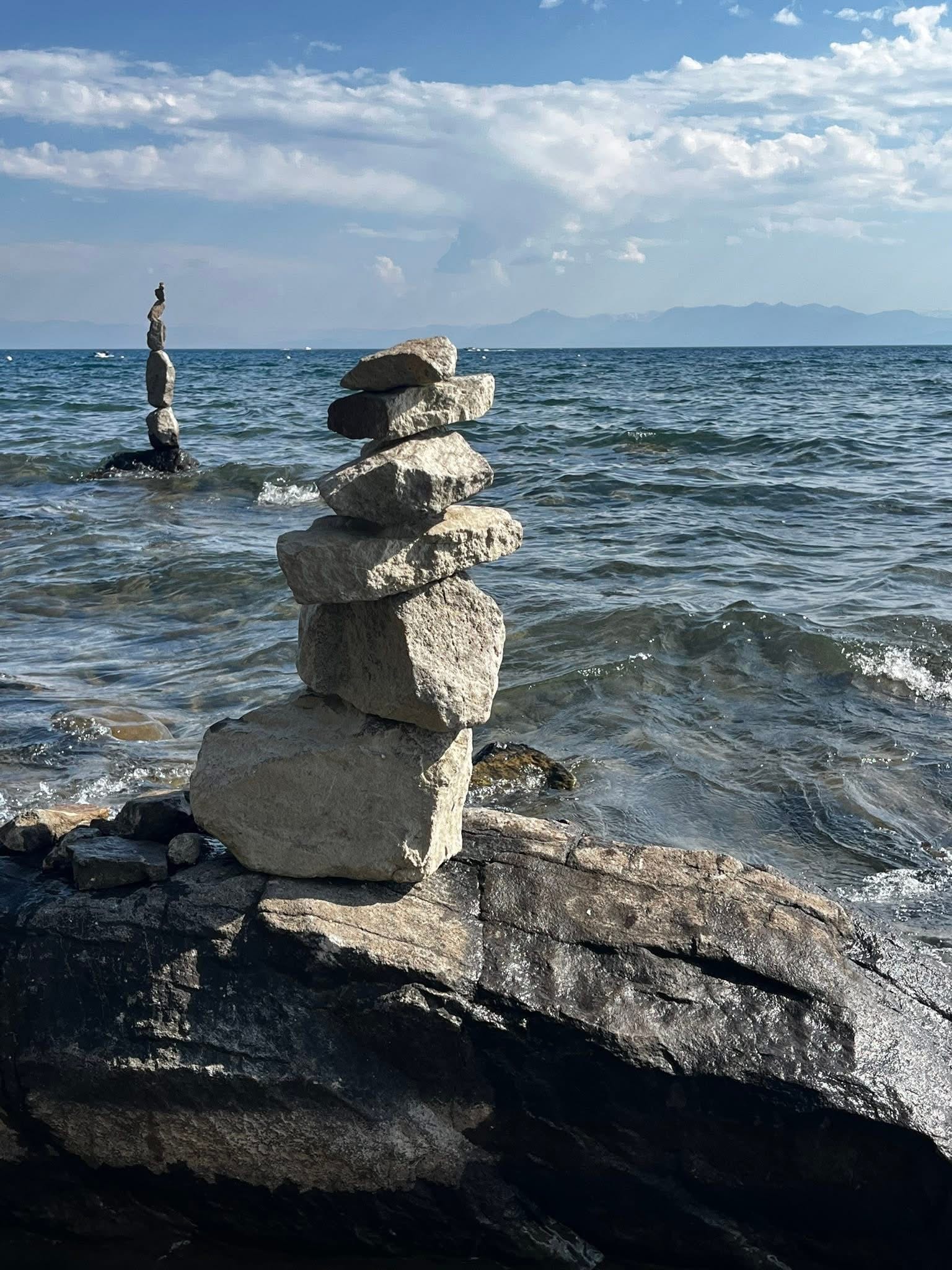
In Scripture, God invites his people to remember him. I love how, in the book of Joshua, God has the Israelites use stones as symbols of remembrance to mark his presence and guidance on their journey. They are those “Look—I am with you” moments.
After the Israelites successfully cross the Jordan River, Jacob tells the people, “When your children ask their fathers in times to come, ‘What do these stones mean?’ then you shall let your children know, ‘Israel passed over this Jordan on dry ground.’ For the Lord your God dried up the waters of the Jordan for you until you passed over… so that all the peoples of the earth may know that the hand of the Lord is mighty, that you may fear the Lord your God forever.”1 These stones are a testimony to the places where God showed up.
Writing is also a way to remember. Stories can serve as powerful stones of remembrance, helping us meaningfully integrate our experiences into our lives and then pass these stories down to those who come after us.
When I forget the goodness of God, writing memorializes it and holds it up to say, “Look—this was once true, and it still is. Don’t ever forget.”
Therapeutic Benefits of Writing
I believe that writing can be life-giving for anyone, particularly those with mental illness.
I was a creative writing major in college, but it wasn’t until I began writing as a way to process and understand suffering and my body’s relationship to pain that writing became a healing practice, not just a hobby. The act of scribbling away on paper, putting language and metaphor to life’s biggest questions, no doubt saved my life over the years. And I haven’t stopped since.
Of course, writing isn’t a substitute for medical or psychiatric care. But good healthcare is still a privilege, and writing is a simple practice anyone can do to increase their well-being. It gives you some level of agency over your suffering, allowing you to become an active participant in your healing journey—something mental illness tries to steal from us.
In Writing As a Way of Healing: How Telling Our Stories Transforms Our Lives, Louise DeSalvo explores the connection between writing and trauma or illness. “Writing,” she says, “seems to improve physical and mental health. But not just any kind of writing. Only a certain kind of writing will help us heal.”
Her studies reveal how therapeutic writing requires the act of not just venting or merely describing events but also the emotions surrounding those events. Although it may be unpleasant to unearth and sit with difficult feelings, studies show that when you endure short-term discomfort and keep writing through it, there can be long-term well-being.
“The more writing succeeds as narrative,” said DeSalvo, “by being detailed, organized, compelling, vivid, lucid—the more health and emotional benefits are derived.”
Tips for Writing About Your Life
So what’s a good place to start? First, just write and don’t think about it. Especially when everything swirling around inside feels chaotic and overwhelming. Just get stuff down. Doodle, play, curse, write nonsensical stream-of-consciousness paragraphs. Vent about your hopes and fears with honesty, like King David in the psalms. Dates are helpful to include, too.
Don’t be surprised if this journaling reads a little dark or negative. It’s important to remember that you won’t stay here. Neither will your writing.
On a day when you’re back in a steady, peaceful frame of mind, try weaving together a very short story. Start small. Maybe five pages or 500 words. Can you choose one specific experience and integrate it into the broader story of your life? Maybe you call it A Day in My Life.
As you paint a scene, reflect on what this experience has shown you about yourself and others, what it stirs in you. Weave in these reflections.
As you write from the heart, use sensory details. Draw from the notes you took earlier. Emotional memory is so closely tied to things like music and the aroma of food. Writing also unearths memories, so the more you write, the more details you may discover (I love this about the creative process!). You might describe the eucalyptus-scented bath salts on the counter or the song that’s on the radio. How the medicine tasted going down your throat or what a loved one’s sweatshirt feels like when you hold onto it.
The good news is you can take notes anywhere: on a voice memo, a notes app, the back of a dirty napkin, or a leather journal.
Final Thoughts
Viktor Frankl, the Austrian psychiatrist and Holocaust survivor, believed a meaningful life came from three key sources—loving relationships, courage in the face of suffering, and purposeful work.
Writing can tap into all three.
On the heavy days, write to honor your pain. Write to make people laugh. Write after the joy of tasting chocolate lava cake in Carmel-by-the-Sea. Write to preserve a precious memory and restore what was lost. Write so you don’t implode. Write to seek God’s presence or connect with others who are walking a similar road.
If you find you want to keep telling your story, add a little more each week and see where the creative journey takes you.
Even if things don’t get easier right away, writing is a gift that can keep you going. It’s healing. And maybe—just maybe—one day, it’ll find its way into the hands of someone else who needs it.
Writing Prompt:
There is one place on earth that is my sanctuary, and that is ___________________________________________.
Listen to Your Life features essays on health, well-being, and spiritual formation. Subscribe for free or support my work by becoming a paid subscriber for $5/month. I’d also love you to follow the Listen to Your Life Podcast! When you do, you’ll be notified each time new episodes release (currently on hiatus):
Joshua 4:6–7, New Living Translation
So good! I like your tip to just write whatever comes out when you’re in the height of emotion then revisit to process more deeply later
So very good!! I’ve called myself a “chronic journaler”, as I have been keeping a journal since I was about 7 years old. Spilling onto paper has always been my therapy and I could not recommend the practice enough!! ☺️